Tattoo Blowouts Explained: Causes, Fixes, and How to Avoid Them
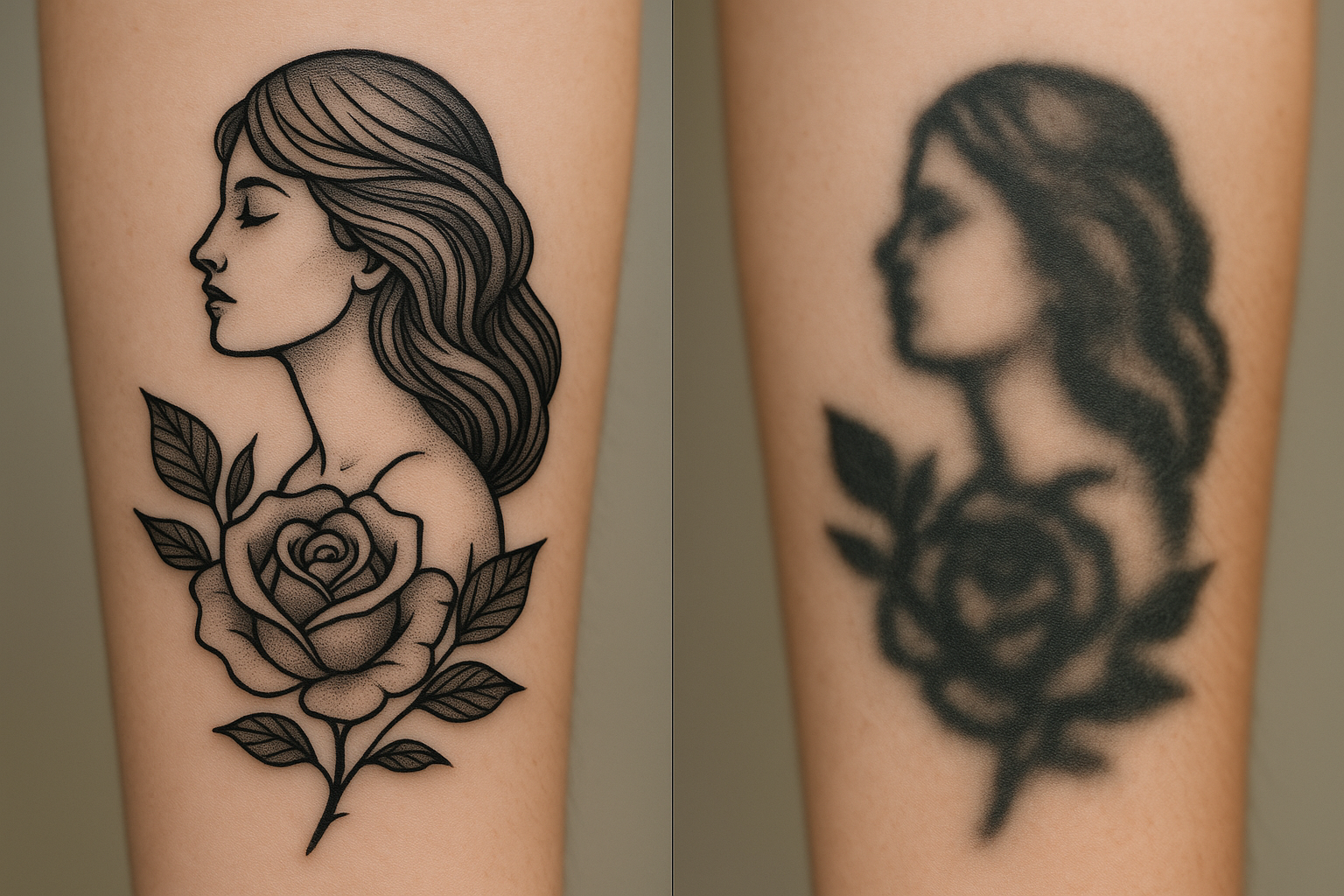
A tattoo blowout happens when the ink spreads beneath the surface of the skin into surrounding tissue. Instead of crisp, clean lines, the design appears blurry, fuzzy, or smudged — like a pen bled through the paper. It often looks like a bluish or grayish shadow radiating from the lines of your tattoo.
Most commonly, blowouts appear within the first few days to weeks after getting inked. They’re frustrating, especially for first-time clients who were expecting a sharp, professional look.
While a blowout doesn’t necessarily mean your tattoo is ruined, it can affect how the design looks — and how you feel about it.
What Causes Tattoo Blowouts?
Let’s break down the most common culprits behind tattoo blowouts:
1. Tattoo Needle Penetrates Too Deep
The #1 cause is when the tattoo needle goes too deep into the skin. A professional tattoo only needs to deposit ink into the dermis, the second layer of skin. If the needle reaches the subcutaneous fat layer beneath the dermis, the ink can spread uncontrollably, causing a blowout.
2. Wrong Needle Angle
Tattooing at the wrong angle can also cause blowouts, especially when working on curved or bony areas like the wrist, foot, or collarbone. If the machine isn’t perpendicular to the skin, it can push ink sideways into unintended areas.
3. Thin or Sensitive Skin
Some areas of the body have thinner or more delicate skin. Think: hands, wrists, ankles, or the neck. These areas are naturally more prone to blowouts even with perfect technique.
4. Excess Pressure
Even with the right depth and angle, applying too much pressure can drive the ink past the dermis. This often happens when an artist is inexperienced or trying to “pack in” ink for a darker result.
5. Improper Stretching of the Skin
During the tattoo process, the skin must be stretched taut. If it’s not, the needle might bounce, drag, or hit at an awkward depth, increasing blowout risk.
How to Tell If It’s a Blowout or Normal Healing
Blowouts are sometimes confused with bruising or swelling during the healing phase. Here’s how to tell the difference:
| Symptom | Blowout | Normal Healing |
|---|---|---|
| Appearance | Blue/gray shadowing under skin | Redness, swelling, slight bruising |
| Timing | Often visible within 24–72 hours | Usually within the first week |
| Texture | Skin feels normal (no bump or scab) | May feel tender, swollen, or flaky |
| Location | Around outlines or dark lines | Directly on tattooed area |
When in doubt, always consult your artist especially if the tattoo starts looking different from how it was first applied.
Can Tattoo Blowouts Be Fixed?
Yes — to a degree. But it depends on the severity of the blowout and the design of your tattoo.
1. Tattoo Touch-Up or Cover-Up
For minor blowouts, a touch-up can correct and redefine blurred lines. Skilled artists can thicken borders or adjust shading to incorporate the blur.
For larger or more obvious blowouts, a cover-up may be necessary by either reworking the existing piece or integrating it into a new design entirely.
2. Laser Tattoo Removal
In extreme cases, laser removal may be used to fade the blowout areas. Keep in mind that lasers work differently on spread ink, and complete removal isn’t always guaranteed.
3. Strategic Shading or Background Work
If the blowout is in a shadowy area, an artist might use soft shading or background effects to blend the blowout into the design intentionally.
How to Prevent a Tattoo Blowout in the First Place
The best fix is prevention and it starts with both the client and the artist.
For Tattoo Artists:
-
Use proper machine settings (voltage, needle depth)
-
Maintain a steady hand and consistent angle
-
Understand skin types and adjust technique accordingly
-
Stretch skin properly throughout the session
-
Avoid overworking an area just to make it darker
For Clients:
-
Choose a reputable artist with solid technical skills and experience
-
Follow aftercare instructions exactly (poor healing can mimic or worsen blowouts)
-
Avoid pressure, friction, or trauma to the fresh tattoo
-
Stay out of pools, saunas, and excessive sun during healing
A professional artist with a deep knowledge of skin anatomy, technique, and tattoo machine calibration is your best defense against blowouts.
When to See Your Artist About a Blowout
If your tattoo starts showing signs of blurring or discoloration that wasn’t present at the end of your session, it’s worth checking in with your artist.
Look out for:
-
Spreading blue/gray lines within the first few days
-
Ink looking “cloudy” around clean outlines
-
Blurred areas that aren’t part of the design
Your artist can:
-
Confirm whether it’s a blowout or normal healing
-
Advise whether it can be touched up or camouflaged
-
Recommend timing for correction or a follow-up session
Do Certain Tattoo Styles Blow Out More Easily?
Yes. Certain styles are inherently more prone to blowouts due to the linework density, needle grouping, and skin trauma level involved.
Styles with Higher Blowout Risk:
-
Heavy Blackwork: Uses large areas of solid black ink that require deeper penetration and can stress the skin.
-
Fine Line Tattoos: Require precision and shallow needle depth. Any over-penetration can easily distort delicate lines.
-
Watercolor Tattoos: Though softer, the color blending techniques can blur if not applied precisely.
-
Script or Lettering on Thin Skin: Words can become illegible if the ink spreads.
Styles with lower blowout risk include:
-
Dotwork (if applied gently)
-
Traditional/Neo-Traditional with bolder, consistent outlines
-
Minimalist geometric patterns with consistent technique
How Skin Type Affects Blowouts
Not all skin reacts the same to tattooing. Your skin’s texture, thickness, elasticity, and moisture level all affect how well it holds ink and whether it’s vulnerable to blowouts.
Skin Factors That Increase Blowout Risk:
-
Thin skin: Hands, feet, and inner wrists
-
Loose skin: Especially in older clients
-
Stretch marks or scars: Irregular texture affects depth control
-
Oily skin: May cause more needle slippage
Professional artists adjust technique based on skin type, modifying needle depth, stroke speed, and machine power.
Blowout vs. Ink Migration: What’s the Difference?
Ink migration is often confused with blowout, but they’re slightly different.
| Feature | Blowout | Ink Migration |
|---|---|---|
| Timing | Happens during/after tattooing | Happens slowly over months/years |
| Cause | Improper depth or pressure | Natural ink movement in body |
| Appearance | Fuzzy halo or shadow | Spread of ink away from original site |
| Fixability | Often correctable | Harder to fix, may require removal |
While blowouts are technique-based errors, migration is biological and more common with older tattoos or poor ink placement over time.
Can Tattoo Blowouts Be Avoided With Better Machines?
Modern tattoo machines offer:
-
Adjustable depth settings
-
Consistent stroke length
-
Less trauma to the skin
This helps reduce the risk but it’s not foolproof. Even the best machine can cause a blowout if the artist lacks proper training or attention to detail.
Machines help, but human skill and awareness matter most.
How to Blend a Blowout Into a Tattoo Design
Skilled artists can salvage a tattoo blowout without full cover-ups. Here are some creative methods:
-
Soft shading: To blend blowout edges into intentional background gradients
-
Add drop shadows: Turn unintentional blur into a shadow effect
-
Layering new elements: Like leaves, filigree, or geometric shapes
-
Texturing with dotwork or stippling to hide irregularities
These techniques require a seasoned artist with experience in tattoo correction because not every artist offers this.
When to Schedule a Fix for a Blowout
Don’t rush into a correction session. Wait for:
-
Complete healing (typically 6–8 weeks minimum)
-
Inflammation or swelling to resolve
-
Your skin to normalize in tone and texture
Trying to fix a blowout on a healing tattoo can worsen the outcome and introduce more trauma.
Ask your artist for personalized timing based on your skin and tattoo location.
Are Certain Body Parts More Prone to Tattoo Blowouts?
Absolutely. Here’s a quick breakdown of high-risk zones:
-
Hands and Fingers: Thin skin, high motion, prone to friction
-
Feet and Ankles: Low-fat areas with constant pressure
-
Neck and Collarbone: Curved surface and thinner skin
-
Wrists and Elbows: Bony, mobile areas that challenge technique
Meanwhile, safer zones include:
-
Upper arms
-
Thighs
-
Calves
-
Shoulder blades
Blowouts are less common here due to better skin stability and easier access for the artist.
Is It Safe to Tattoo Over a Blowout?
Yes — but only after the skin has fully healed.
Tattooing over a blowout requires:
-
Expert line control
-
Strategic use of color and shading
-
A plan to avoid reinforcing the blowout
In some cases, using lighter tones or softer patterns works best. Trying to re-outline or darken the blowout area with the same ink often makes things worse.
Do Tattoo Blowouts Hurt More?
Not exactly. Blowouts aren’t more painful by themselves, but they often happen when:
-
The needle goes too deep (which does hurt more)
-
The artist overworks an area (creating a burning or scratching sensation)
So while blowouts don’t cause pain after the fact, the technique that causes them can be more uncomfortable during the session.
Tattoo Blowouts on Different Skin Tones
Blowouts show up differently depending on skin tone:
-
Light skin: Bluish/gray shadows are highly visible
-
Medium skin: Blowouts may look darker than surrounding pigment
-
Dark skin: Blowouts can be harder to spot but still affect clarity
In every case, a blowout reduces contrast and definition, especially in detailed linework or script. That’s why proper technique is critical, regardless of melanin levels.
Tattoo Apprentices and Blowout Risk
Apprentice artists are far more likely to cause blowouts because they’re still learning:
-
Depth control
-
Skin stretching technique
-
Needle configuration
-
Machine calibration
If you’re working with an apprentice, make sure:
-
They’re supervised
-
You’re not getting detailed or risky placements
-
You’re informed of the risks
A trained eye can catch errors before they become permanent which is why apprenticeships under experienced artists are so important.
Does Tattoo Aftercare Help Prevent Blowouts?
Yes — while most blowouts are caused during application, poor aftercare can worsen them.
Tips to reduce post-tattoo ink spreading:
-
Avoid pressure or rubbing on fresh ink
-
Don’t sleep on the tattooed area
-
Use breathable bandages and proper ointment
-
Stay out of the sun, hot tubs, and saunas
-
Avoid aggressive moisturizers that soften skin too much
Following your artist’s aftercare guide is non-negotiable if you want clean, crisp results.
Can You Prevent Tattoo Blowouts with Numbing Cream?
This is a common misconception. Numbing creams only dull pain but they don’t affect ink depth or pressure.
In fact, numbing creams can slightly inflate the skin, which might:
-
Change how the artist sees ink saturation
-
Lead to deeper penetration without realizing it
Pro tip: If you’re using numbing cream, let your artist know so they can adjust accordingly.
Are Blowouts More Common in First-Time Clients?
Surprisingly, yes but it’s not always the artist’s fault.
First-timers are more likely to:
-
Move during the session
-
Tense up from nerves
-
Pick high-risk placements (wrists, fingers, hands)
-
Choose delicate designs like script or fine line
They’re also more prone to improper aftercare because they’re unfamiliar with healing protocols. Education goes a long way.
Can Diet or Health Affect Tattoo Blowout Risk?
Not directly but your overall skin health matters.
Conditions that may influence tattoo outcomes include:
-
Diabetes
-
Eczema
-
Thin skin due to age or medication
-
Dehydration (which affects skin elasticity)
Stay hydrated, eat skin-healthy foods (vitamin C, zinc), and avoid alcohol before your session to improve skin resilience.
Do Tattoo Inks Play a Role in Blowouts?
While ink brand isn’t a major factor, ink consistency and pigment size can matter.
-
Thinner inks might migrate more easily if applied too deep
-
Overpacked dark ink can push past dermis if layered aggressively
-
Homemade or unregulated inks increase all risks, including blowout
Professional studios like DH Tattooing use sterile, tested, industry-standard inks that are minimizing unnecessary risks.
Real Client Stories: Blowout Corrections That Worked
Here are anonymized examples from past clients to help you understand how fixable blowouts can be:
Client A:
Fine-line script on the inner wrist had mild blur. We added a drop shadow and extended the design to camouflage the blowout. Looks intentional now.
Client B:
Blackwork on the hand showed serious spread. We waited 2 months and added soft shading to mask the fuzz. The end result looked like a custom rework.
Client C:
Tattoo blowout from another shop. Used laser fading followed by a full cover-up sleeve which is a two-step fix that turned regret into pride.
Final Checklist: Tattoo Blowout Prevention for Clients
Here’s your quick reference guide for keeping those lines crisp:
✅ Choose an experienced, professional artist
✅ Avoid tattoos on high-risk areas unless your artist recommends it
✅ Communicate about skin type, health conditions, and expectations
✅ Follow aftercare instructions exactly with no shortcuts
✅ Stay still, calm, and hydrated during your session
✅ Book a follow-up if anything looks off
Blowouts are avoidable in most cases. Education is your best tool and your artist is your best ally.
Final Thoughts: Choose the Right Artist to Avoid Tattoo Blowouts
Blowouts can happen, even to experienced artists, but they’re far less likely when you do your research and choose a true professional. At DH Tattooing in Livermore, CA, we understand skin anatomy, machine technique, and tattoo placement like the back of our hand.
Whether you’re booking your first tattoo or you’re a seasoned collector, understanding blowouts gives you an edge. You’ll know what to expect, how to avoid them, and what to do if they show up.
If you’re in the East Bay and want an experienced black and grey realism specialist who prioritizes clean work and flawless healing, (internal link) book your consultation with DH Tattooing today.