How to Choose the Perfect Tattoo Placement: A Complete Guide for First-Timers and Collectors
Choosing a tattoo design is exciting. Choosing where it goes? That’s permanent strategy.
Tattoo placement affects:
-
How much it hurts
-
How well it ages
-
How visible it is
-
How it flows with your body
-
Whether you’ll still love it 10 years from now
Many first-time clients focus entirely on the artwork. But experienced collectors know something different: placement can make or break even the best design.
A perfectly executed tattoo placed without considering movement, skin texture, sun exposure, or body shape can lose impact. Meanwhile, a thoughtfully placed piece can look like it was always meant to live there.
Tattoo placement isn’t just about empty space on your body. It’s about composition.
The 5 Core Factors That Should Guide Your Tattoo Placement
Before you decide where your tattoo goes, consider these five foundational elements.
1. Pain Tolerance
Some areas of the body are more sensitive than others. Bone proximity, thin skin, and nerve density all play a role.
High-sensitivity areas often include:
-
Ribs
-
Spine
-
Feet
-
Hands
-
Sternum
Lower-sensitivity areas typically include:
-
Outer forearm
-
Outer upper arm
-
Thigh
-
Calf
If this is your first tattoo, placement can significantly influence your experience. A smoother first session builds confidence for future work.
2. Visibility and Lifestyle
Ask yourself:
-
Do I want this tattoo visible daily?
-
Do I work in a conservative environment?
-
Do I want control over when people see it?
Common highly visible placements:
-
Forearm
-
Hand
-
Neck
Easily concealed placements:
-
Upper thigh
-
Back
-
Upper arm
-
Ribcage
For many professionals in Livermore and the Bay Area, flexibility matters. A well-chosen placement allows self-expression without professional friction.
3. How the Tattoo Will Age
Skin changes over time. Some areas maintain crisp detail better than others.
Generally age best:
-
Outer forearm
-
Upper arm
-
Upper back
-
Calves
More prone to fading or distortion:
-
Fingers
-
Hands
-
Feet
-
Inner lip
-
Areas with frequent friction
Sun exposure also plays a major role. Forearms and shoulders receive more UV exposure than areas typically covered by clothing.
4. Body Movement and Distortion
Your body is not a flat canvas.
Areas that stretch frequently (like the stomach or elbow ditch) can distort designs over time. Joints bend. Muscles flex. Skin compresses.
A professional artist evaluates:
-
How your arm rotates
-
How your shoulder rounds
-
How your thigh moves when walking
Placement should enhance motion, not fight it.
5. Future Tattoo Plans
Even if you’re getting one small tattoo today, consider this:
Will you want more later?
Smart placement leaves room for expansion. A small forearm piece can later become part of a sleeve. A thigh tattoo can expand into a leg project.
Planning ahead prevents awkward gaps and spacing issues later.
Tattoo Placement and Pain: What You Should Realistically Expect
Pain varies person to person, but placement is a major factor.
High-pain zones tend to have:
-
Thin skin
-
Minimal fat
-
Proximity to bone
-
High nerve concentration
Lower-pain zones tend to have:
-
Thicker skin
-
More muscle or fat
-
Less bone contact
However, pain is temporary. Placement is forever.
If you’re nervous, choosing a moderate-sensitivity area for your first tattoo builds confidence without overwhelming you.
How Tattoos Age on Different Parts of the Body
Tattoo aging isn’t random. Placement influences longevity.
Forearm
One of the best all-around placements:
-
Moderate sun exposure
-
Minimal distortion
-
Great visibility
-
Ages well with proper care
Upper Arm
Excellent for:
-
Medium to large pieces
-
Sleeve building
-
Long-term clarity
Back
Large canvas. Low friction. Ages beautifully if protected from sun.
Ribs
Stunning placement visually, but:
-
Higher pain
-
Skin movement with breathing
-
Can fade slightly faster
Hands and Fingers
Bold statement placement, but:
-
High friction
-
Frequent washing
-
Faster fading
-
More touch-ups required
Understanding these differences prevents regret later.
Visibility, Lifestyle, and Career Considerations
Tattoos are more accepted than ever, especially in California. But placement still matters depending on your career path.
If you work in:
-
Healthcare
-
Corporate environments
-
Education
You may want flexibility.
Strategic placements that offer visibility control:
-
Upper arm
-
Inner forearm (covered by long sleeves)
-
Thigh
-
Upper back
For creatives, entrepreneurs, or tradespeople, visible placements like forearms often align with personal branding.
Placement is not about hiding who you are. It’s about intentional presentation.
Tattoo Flow: Designing With the Body, Not Against It
This is where professional insight truly matters.
A tattoo should follow the natural lines of your body.
Examples:
-
Script flows better along collarbones or forearms than straight across curved muscles.
-
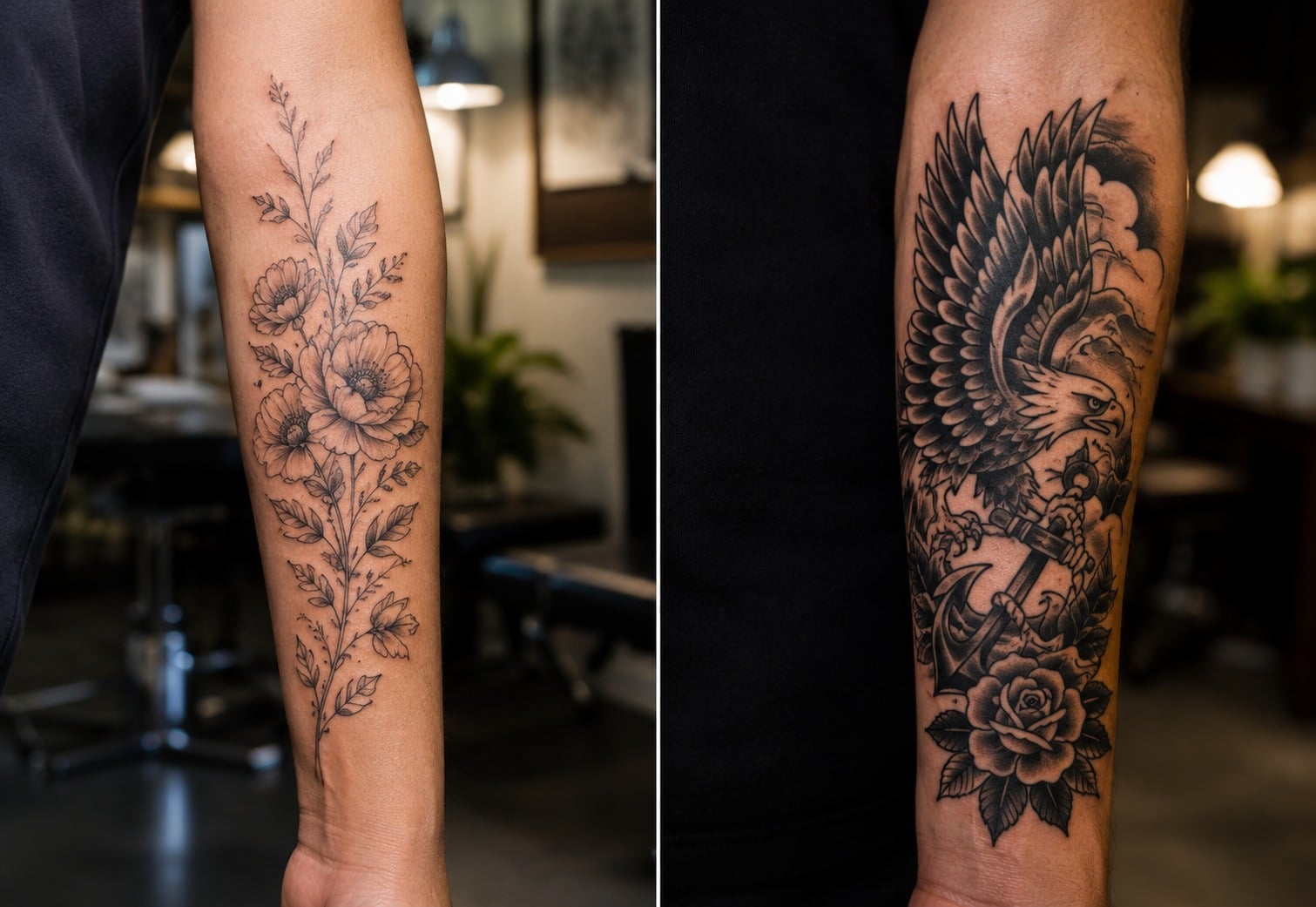
Vertical designs complement limbs.
-
Circular designs sit naturally on shoulders or knees.
-
Large realism pieces need flat, stable surfaces.
An experienced artist evaluates:
-
Muscle direction
-
Natural curves
-
Symmetry
-
Balance with existing tattoos
Good placement makes a tattoo look organic and not pasted on.
Best Tattoo Placement Ideas for First-Timers
If this is your first tattoo, here are beginner-friendly options:
Outer Forearm
-
Moderate pain
-
Great visibility
-
Easy healing
-
Ideal for small to medium pieces
Upper Arm
-
Easy to conceal
-
Great for growing into a sleeve
-
Lower pain
Calf
-
Balanced pain level
-
Less sun exposure
-
Good for detailed work
Upper Thigh
-
Private placement
-
Large canvas
-
Lower sensitivity
First tattoos should build confidence, not trauma.
Placement Strategy for Large or Custom Pieces
Large-scale work demands strategic planning.
Sleeves
Don’t start randomly. Plan:
-
Flow from shoulder to wrist
-
Negative space balance
-
Future filler design
Back Pieces
The back offers:
-
Symmetry
-
Large composition potential
-
Long-term durability
Leg Projects
Thigh-to-calf pieces require:
-
Movement awareness
-
Proportional scaling
-
Future expansion consideration
Large tattoos are long-term collaborations between you and your artist. Placement is architectural.
Tattoo Placement for Men vs. Women: Does It Really Differ?
Technically? No.
Practically? Sometimes.
Placement preferences often reflect:
-
Clothing styles
-
Social expectations
-
Body shape differences
Common trends:
-
Men often choose forearms, chest, calves.
-
Women often choose ribs, thighs, collarbones.
But these are trends and not rules.
The only rule that matters: choose placement that aligns with your aesthetic, confidence, and future goals.
Common Tattoo Placement Mistakes to Avoid
1. Choosing Trend Over Longevity
Hands and neck tattoos are popular but they fade faster and impact career flexibility.
2. Ignoring Body Flow
Flat designs on curved areas can look distorted.
3. Not Considering Expansion
That small tattoo might turn into a half sleeve later.
4. Prioritizing Visibility Alone
Think about aging, sun exposure, and friction.
5. Skipping Professional Input
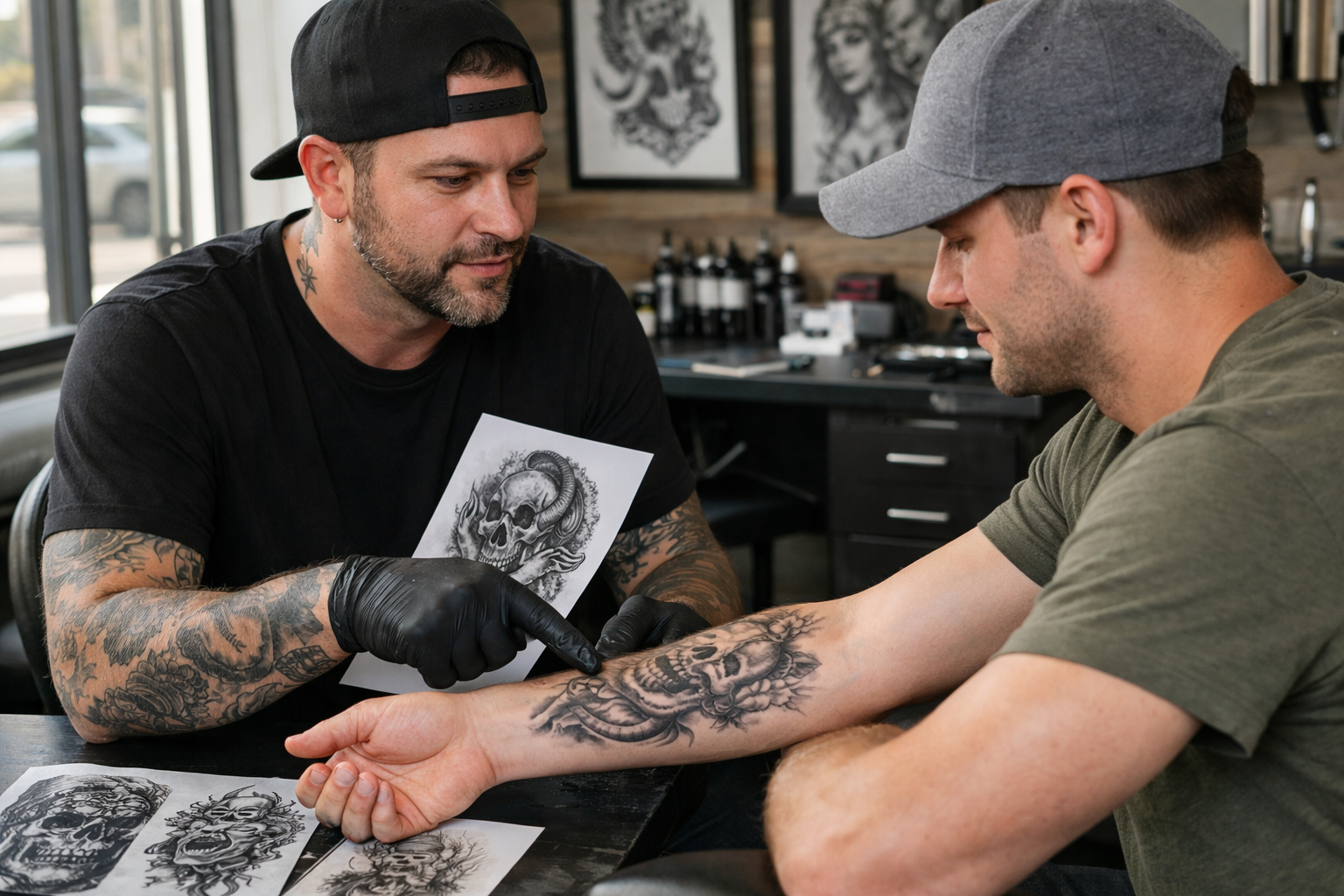
An experienced tattoo artist evaluates placement from angles you may not consider.
The Psychology of Tattoo Placement: What Your Choice Says About You
Tattoo placement is not just physical, it is psychological.
Where you choose to place a tattoo often reflects something deeper than aesthetics. It reflects how you want to experience your tattoo, how you want others to experience it, and how you see yourself evolving over time.
Some placements are outward-facing. Others are inward.
Highly Visible Placements: Identity and Expression
Forearms, hands, neck, and lower legs are conversation starters. They signal openness. Confidence. Ownership.
Clients who choose visible placement often:
-
Want their tattoo to be part of daily identity
-
Feel deeply connected to the meaning
-
Don’t want to “hide” their story
-
See tattooing as personal branding
A forearm tattoo, for example, becomes part of how you gesture, shake hands, and interact socially. It integrates into your daily movement.
It becomes part of you publicly.
Semi-Visible Placements: Controlled Expression
Upper arms, calves, and collarbones offer balance. These placements allow visibility when desired but can be covered when necessary.
This choice often reflects:
-
Strategic expression
-
Professional flexibility
-
Selective sharing
Many first-time clients gravitate toward these placements because they offer psychological safety. You get the emotional reward of visible art without permanent exposure.
Private Placements: Intimacy and Personal Meaning
Ribs, upper thighs, sternum, and back pieces often carry deeply personal meaning.
These placements:
-
Are experienced more privately
-
Feel intimate and intentional
-
May represent inner transformation
Some tattoos are not meant for public display. They are reminders. Anchors. Milestones.
The psychology of placement often matters just as much as pain or aging.
Before choosing placement, ask:
Who is this tattoo for?
Me? Or everyone else?
There is no right answer, only honest self-awareness.
How to Make the Final Placement Decision with Confidence
Here’s a simple framework:
-
Visualize it long-term.
-
Consider visibility control.
-
Think about future tattoos.
-
Ask how it ages.
-
Trust professional guidance.
Great tattoo placement feels intentional and not impulsive.
When design and placement align, the result doesn’t just look good. It feels right.
Tattoo placement is strategy, art, and foresight combined. Whether you’re getting your first piece or planning a full sleeve, placement deserves as much thought as the design itself.
The right placement transforms a tattoo from decoration into identity.