Fine Line Tattoos vs. Bold Line Tattoos: Which Style Ages Better?
Choosing a tattoo is about much more than finding the perfect design. One of the biggest decisions you’ll make is whether your artwork should feature delicate, fine lines or bold, prominent outlines. While both styles can produce stunning results, they don’t always age the same way.
It’s common to hear people say that “fine line tattoos don’t last,” while others insist bold tattoos are the only designs that stand the test of time. Like many tattoo discussions, the truth is more nuanced.
A tattoo’s longevity depends on a combination of artistic technique, skin biology, placement, lifestyle, and aftercare and not simply how thick the lines appear on the day you leave the studio.
Understanding these differences before getting tattooed helps you make a decision you’ll still appreciate years from now.
Understanding Fine Line and Bold Line Tattoos
What Are Fine Line Tattoos?
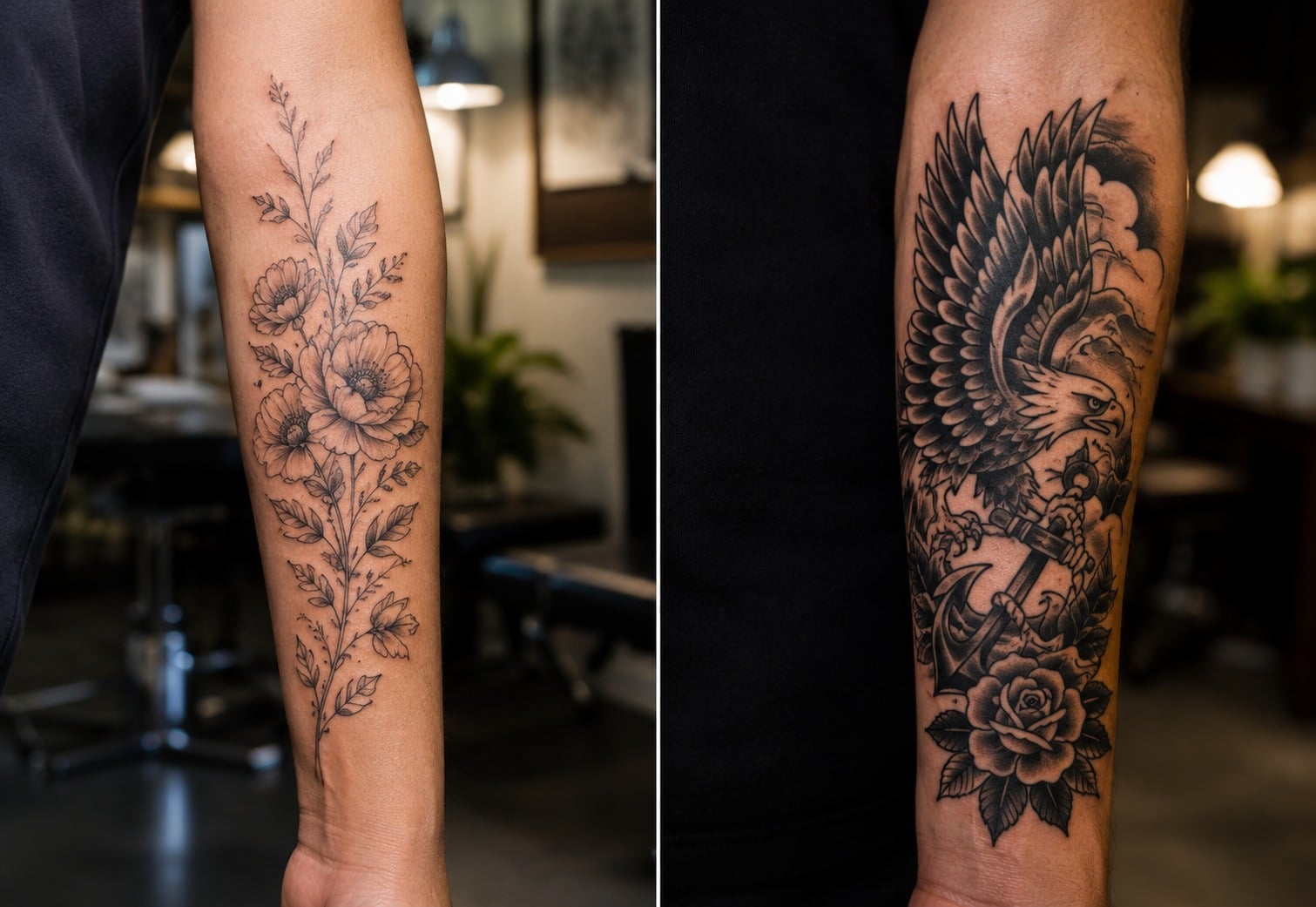
Fine line tattoos use extremely thin needles to create crisp, delicate lines with minimal visual weight. They often feature:
- Intricate illustrations
- Floral designs
- Script lettering
- Micro realism
- Minimalist artwork
- Detailed black and grey realism
These tattoos are admired for their elegance and subtle appearance. Instead of relying on heavy outlines, they emphasize precision and intricate detail.
Fine line tattoos have become increasingly popular because they photograph beautifully and often create a softer, more refined look than traditional styles.
However, their delicate appearance also means every line must be placed with exceptional accuracy. Small imperfections are often much more noticeable than they would be in heavier designs.
What Are Bold Line Tattoos?
Bold line tattoos rely on thicker outlines that create strong visual contrast. They’re commonly seen in:
- Traditional tattoos
- Neo-traditional work
- Japanese tattoos
- Tribal designs
- Illustrative tattoos
- Many geometric styles
The thicker outlines act as a visual framework, helping the design remain recognizable even as natural skin changes occur over time.
Bold lines create separation between different parts of the artwork, making images easier to read from a distance and years into the future.
That doesn’t automatically make bold tattoos “better”, they simply age differently.
Neither Style Is Superior
One of the biggest misconceptions in tattooing is that one style is universally better.
In reality, every tattoo should match:
- Your personal style
- The subject matter
- Your anatomy
- Your long-term expectations
A realistic portrait often benefits from refined detail and softer transitions.
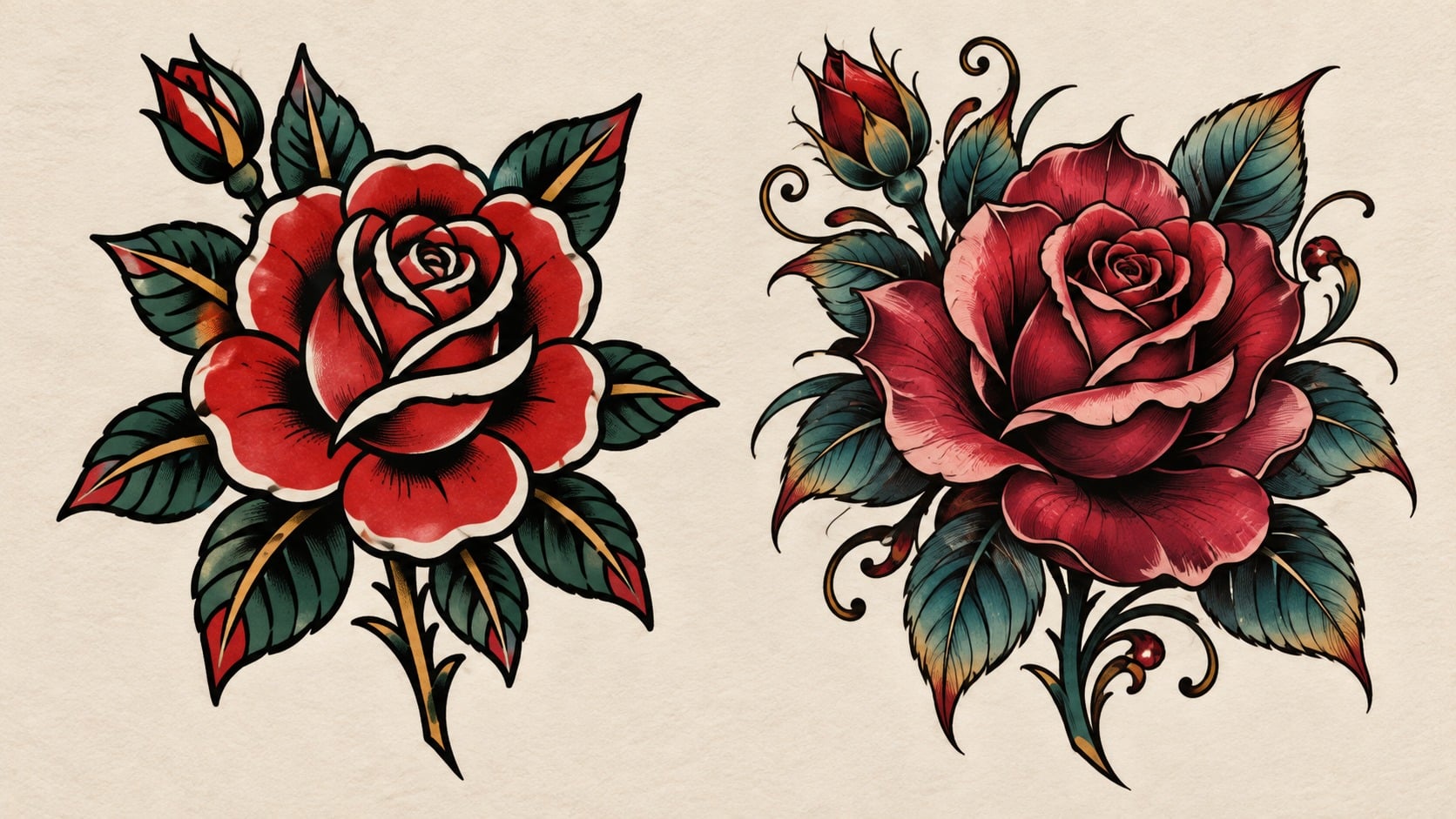
A traditional eagle or panther usually relies on bold outlines to preserve its iconic appearance.
The best tattoo isn’t determined by line thickness.
It’s determined by whether the style fits the artwork.
Why Tattoo Aging Happens in the First Place
Before comparing line weights, it’s important to understand why every tattoo changes over time.
Many people expect tattoos to remain exactly as they looked on day one.
Unfortunately, human skin isn’t static.
Your body constantly renews itself.
Ink Lives Beneath the Skin
Tattoo pigment sits within the dermis, the stable layer beneath the constantly shedding outer skin.
After healing, immune cells help hold pigment particles in place.
While much of the ink remains for decades, several natural processes slowly change its appearance.
These include:
- Skin stretching
- Collagen loss
- Sun exposure
- Natural aging
- Weight changes
- Friction
- Gradual pigment migration
These processes affect every tattoo regardless of style.
Tiny Changes Add Up
Tattoo lines don’t simply disappear overnight.
Instead, microscopic changes accumulate over years.
Edges soften.
Pigment spreads slightly.
Contrast decreases.
Details become less defined.
Most people don’t notice these changes annually because they happen gradually.
Looking back at a tattoo after ten or fifteen years, however, often reveals how much subtle transformation has occurred.
Quality Matters More Than Many People Realize
The tattoo itself plays a huge role in aging.
An experienced artist understands:
- Needle depth
- Skin tension
- Line consistency
- Ink saturation
- Placement strategy
When these fundamentals are executed properly, tattoos often age remarkably well.
Poor application, however, can lead to:
- Uneven fading
- Blowouts
- Patchiness
- Lost detail
- Premature touch-ups
This is why choosing an experienced artist often matters more than choosing thick or thin lines alone.
How Line Thickness Affects Long-Term Results
Line weight changes how a tattoo ages because it influences how much visual margin exists as pigment naturally settles over time.
Imagine writing with a mechanical pencil versus a thick permanent marker.
If both lines become slightly blurred years later, which remains easier to read?
The marker.
The same principle applies to tattoos.
Fine Lines Leave Less Room for Change
Fine line tattoos depend on exceptional precision.
When the original line is extremely thin, even minor pigment migration becomes more noticeable.
Over time, delicate details may begin to merge together if:
- Elements are packed too closely
- The design is extremely small
- Skin experiences heavy wear
- The tattoo receives significant sun exposure
This doesn’t mean fine line tattoos always blur.
It means they require smarter design choices.
Professional artists often simplify tiny details specifically because they understand how tattoos mature over time.
Bold Lines Have Built-In Durability
Thicker outlines contain more visual weight.
As the tattoo naturally softens, the artwork often remains easier to recognize.
This is one reason traditional tattoo styles continue looking recognizable decades after they were created.
Their strong outlines compensate for normal aging.
That durability explains why many century-old tattoos remain surprisingly readable despite decades of natural skin changes.
Design Matters More Than Thickness Alone
A well-designed fine line tattoo frequently outlasts a poorly executed bold tattoo.
Successful tattoos consider:
- Proper spacing
- Appropriate scale
- Anatomical placement
- Future aging
- Skin movement
An experienced artist plans for what the tattoo will look like years later, not just immediately after the appointment.
That long-term thinking often separates exceptional tattoos from average ones.
The Importance of Negative Space
One of the most overlooked elements of tattoo longevity is negative space.
Negative space refers to the untouched skin intentionally left between lines, shading, and details.
These small gaps help preserve readability as tattoos mature.
Without enough breathing room, details can gradually appear crowded.
This is especially important for:
- Botanical illustrations
- Animal portraits
- Detailed black and grey realism
- Ornamental tattoos
- Fine script
Leaving adequate spacing today helps preserve clarity years into the future.
Setting Realistic Expectations
Every tattoo changes.
That’s completely normal.
The goal isn’t preventing aging altogether.
The goal is choosing artwork that continues looking beautiful throughout the natural aging process.
Understanding this from the beginning often leads to greater long-term satisfaction because expectations align with reality instead of social media filters or freshly completed tattoos.
Do Fine Line Tattoos Fade Faster?
The short answer is they can, but not simply because they’re fine line tattoos.
This is one of the biggest misconceptions in the tattoo industry.
Many people believe that thin lines are destined to disappear within a few years. In reality, the longevity of a fine line tattoo depends on several variables working together. When those factors are carefully considered, a fine line tattoo can remain beautiful for many years.
Why People Think Fine Line Tattoos Don’t Last
Fine line tattoos have exploded in popularity thanks to social media. Fresh tattoos often look incredibly crisp, with razor-sharp detail and clean, delicate lines.
However, many online photos are taken immediately after the tattoo is finished. Few people post updates five, ten, or fifteen years later.
As tattoos naturally age, those tiny lines soften. Since fine line designs start with less visual weight than bold tattoos, the change can appear more dramatic.
That doesn’t mean the tattoo has failed, it means it has matured.
Size Makes a Big Difference
One of the biggest mistakes isn’t choosing fine lines. It’s choosing artwork that’s too small.
Imagine trying to draw an entire forest inside a postage stamp. Even with perfect technique, there simply isn’t enough room for every tree to remain distinct forever.
The same principle applies to tattoos.
When a design includes tiny leaves, miniature lettering, intricate geometric shapes, or extremely detailed portraits in a very small space, natural aging may cause those details to blend together over time.
A skilled tattoo artist knows when to recommend making a design slightly larger. That extra space can dramatically improve how the tattoo looks years down the road.
Placement Influences Longevity
Different areas of the body age differently.
Fine line tattoos generally hold their detail better in areas with relatively stable skin, such as:
- Upper arm
- Outer forearm
- Shoulder
- Upper back
- Calf
- Thigh
Areas that experience constant movement, friction, or sun exposure may show changes more quickly, including:
- Fingers
- Hands
- Feet
- Wrists
- Elbows
- Knees
This doesn’t mean these locations should be avoided. It simply means expectations should match the realities of how skin behaves.
Why Bold Line Tattoos Tend to Last Longer
Bold tattoos have earned a reputation for longevity for good reason.
Thicker outlines provide stronger visual definition that remains recognizable even after years of natural skin changes.
That’s one reason traditional tattoo styles from decades ago often still look remarkably clear today.
Visual Contrast Is Their Strength
Bold tattoos create stronger contrast between ink and skin.
As pigment softens over time, that contrast helps preserve the overall design.
Think about road signs.
Large, bold lettering remains easier to read from a distance than thin handwriting.
Tattoo lines behave similarly as they mature.
Simpler Designs Often Age Better
Many bold tattoo styles intentionally simplify artwork.
Instead of relying on dozens of tiny details, they focus on:
- Strong outlines
- Clear shapes
- Balanced shading
- Readable composition
These principles naturally support long-term clarity.
That’s not because fine detail is bad, it simply requires more planning.
Other Factors That Affect Tattoo Longevity
Line thickness is only one piece of the puzzle.
Several other factors often have an even greater impact on how a tattoo ages.
Artist Experience
An experienced artist understands how skin responds during tattooing.
Proper needle depth is critical.
If ink is placed too shallow, it may heal unevenly.
Too deep, and the result may include blowouts or excessive spreading.
Professional technique helps create tattoos designed to age gracefully from the very beginning.
Skin Type
Everyone’s skin is different.
Factors such as:
- Oil production
- Elasticity
- Collagen levels
- Healing response
- Age
can all influence how tattoos settle over time.
Rather than forcing every design onto every client, experienced artists adapt their approach to the individual’s skin.
Sun Exposure
Ultraviolet light is one of the biggest contributors to tattoo fading.
Excessive sun exposure gradually breaks down pigment while accelerating skin aging.
Protecting healed tattoos with appropriate clothing or sunscreen helps preserve both bold and fine line work.
Lifestyle
Certain lifestyles naturally expose tattoos to more wear.
Examples include:
- Outdoor occupations
- Frequent swimming
- Intense athletic training
- Regular friction from equipment
- Repeated hand washing
None of these prevent someone from getting tattooed.
They simply influence how the tattoo may age over time.
Aftercare
Proper healing sets the foundation for long-term results.
Following your artist’s aftercare instructions allows the skin to recover while protecting newly placed pigment.
Once healed, ongoing skin care also contributes to maintaining vibrant artwork.
Which Style Is Better for Black and Grey Realism?
This is where the conversation becomes more interesting.
Many people assume black and grey realism relies entirely on fine lines.
In reality, exceptional realism often combines multiple line weights.
A portrait may include:
- Fine details in the eyes
- Medium-weight structural lines
- Soft shading
- Carefully controlled contrast
The result feels incredibly realistic without depending exclusively on ultra-thin outlines.
Experienced realism artists know where delicate detail enhances the artwork and where slightly stronger structure improves longevity.
It’s this balance that allows realistic tattoos to remain visually striking for years.
Choosing the Right Style for Your Tattoo
Instead of asking, “Which style lasts longer?”, consider asking:
“Which style best fits the artwork I want?”
A meaningful tattoo should complement:
- Your personal aesthetic
- Your anatomy
- The size of the design
- Your long-term expectations
If you love delicate botanical illustrations, a thoughtfully designed fine line tattoo may be the perfect choice.
If you’re drawn to timeless traditional imagery, bold outlines may better suit your vision.
The goal isn’t choosing the “winner.”
The goal is choosing the right artistic approach for your design.
Tips to Help Any Tattoo Age Beautifully
Regardless of style, these habits can help preserve your tattoo for years.
Choose an Experienced Artist
Skill remains the single most important factor in long-term tattoo quality.
Don’t Go Too Small
Allow enough space for details to mature naturally.
Protect Your Skin
Limit unnecessary sun exposure and care for your skin throughout the year.
Maintain Healthy Skin
Well-moisturized, healthy skin helps tattoos continue looking their best.
Follow Aftercare Carefully
Healing is just as important as the tattoo session itself.
Think Long-Term
Choose a design you’ll appreciate not only today but years from now.
Final Thoughts
The debate between fine line tattoos and bold line tattoos doesn’t have a universal answer.
Yes, bold outlines generally maintain stronger visual definition over decades. But that doesn’t mean fine line tattoos are destined to fade into obscurity.
When thoughtfully designed, applied by an experienced artist, and cared for properly, both styles can age beautifully.
The most successful tattoos aren’t determined by line thickness alone. They’re the result of careful planning, skilled execution, smart placement, realistic expectations, and ongoing care.
Whether you’re drawn to the understated elegance of fine lines or the timeless confidence of bold outlines, understanding how tattoos naturally evolve helps you make an informed decision you’ll continue appreciating for years to come.