Ink Allergies & Tattoo Reactions: What to Know Before Getting Tattooed
Getting a tattoo is an exciting, deeply personal experience, but for some people, it can also lead to unexpected skin reactions. While mild redness or swelling is normal during healing, some clients experience allergic reactions to the ink itself.
Tattoo ink allergies aren’t extremely common, but they do happen and knowing the signs, causes, and prevention strategies can make the difference between beautiful healed ink and a medical issue.
This guide breaks down what causes ink allergies, how to tell if you’re having a reaction, and what to do if it happens, all written from the perspective of a professional tattoo studio that cares about your skin as much as your art.
What Causes Tattoo Ink Allergies?
Tattoo ink allergies are typically caused by a hypersensitive immune response to one or more ingredients in the ink, usually pigments or additives.
When the immune system detects a substance it sees as “foreign,” it can overreact, triggering symptoms like itching, rash, or swelling.
Most allergic reactions are associated with:
-
Pigments derived from metals (especially in red, yellow, or green ink)
-
Preservatives and stabilizers used in the ink
-
Contaminants from low-quality ink or improper sterilization
Common Symptoms of Ink Allergies and Reactions
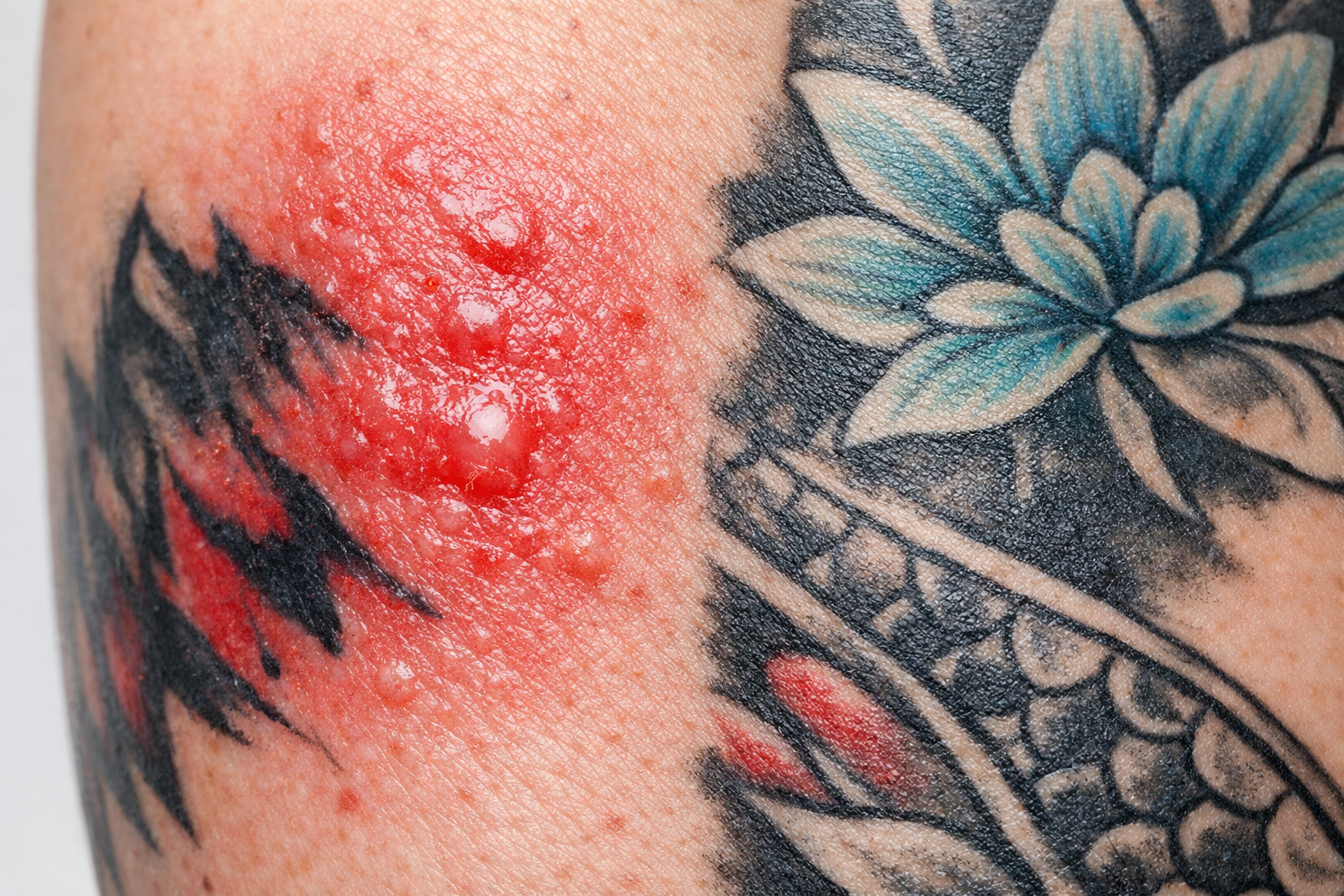
Mild reactions can look similar to normal healing, but if symptoms persist or worsen after a few days, you may be experiencing an allergic reaction.
Watch for these symptoms:
-
Persistent redness or inflammation beyond 3–5 days
-
Itchy bumps or rashes around or within the tattoo
-
Blisters or raised, scaly skin
-
Tattoo scabbing that won’t go away
-
Excessive swelling
-
Clear fluid or pus discharge
-
Pain that worsens instead of improves
It’s also important to distinguish between normal healing and a reaction. A skilled tattoo artist will help you understand what’s expected during recovery and when something’s not right.
Tattoo Ink Ingredients: What’s Really in the Ink?
Professional tattoo inks are made of two main components:
-
Pigment: The color itself
-
Carrier: A liquid that helps deliver the pigment into the skin
Common carriers include:
-
Distilled water
-
Ethanol (alcohol)
-
Glycerin
-
Witch hazel
Pigments can be natural or synthetic, but many include trace metals or chemicals that cause reactions in sensitive clients:
-
Red ink: Often contains mercury sulfide (cinnabar)
-
Yellow ink: May include cadmium sulfide
-
Green ink: Can contain chromium oxide
-
Blue ink: Sometimes includes cobalt
Even “organic” pigments may include allergens, so “natural” doesn’t always mean “safer.”
Tattoo Blowout vs Allergic Reaction vs Infection
If your tattoo looks off after healing, it’s important to understand why.
Tattoo Blowout:
Caused by ink spreading beneath the skin due to poor technique or thin skin areas (like hands or feet). Appears as a bluish or fuzzy halo around lines.
Allergic Reaction:
Localized symptoms like rash, itching, or bumps that don’t align with a blowout’s appearance.
Infection:
Usually includes heat, pus, and worsening pain. Can spread beyond the tattoo area and may require antibiotics.
If you’re unsure, contact your artist first and seek medical attention if symptoms escalate.
High-Risk Colors and Skin Sensitivities
Certain pigments are known to trigger more allergic responses:
-
Red ink is by far the most reactive and linked to chronic itching or granulomas
-
Yellow ink is photosensitive, meaning sunlight can cause rashes
-
Green and blue inks are less reactive but still riskier than black or grey
Clients with existing skin conditions (eczema, psoriasis, dermatitis) should be especially cautious and speak with their dermatologist beforehand.
What to Do If You Experience a Reaction
If you think you’re reacting to your tattoo ink:
-
Do not scratch the area. It can worsen the reaction and increase infection risk.
-
Apply a cold compress to reduce itching and inflammation.
-
Use over-the-counter antihistamines (e.g., Benadryl) to calm the immune response.
-
Apply hydrocortisone cream only if approved by your tattoo artist or doctor.
-
Avoid sun exposure on the tattoo until symptoms resolve.
-
Contact your tattoo artist to discuss what’s normal and what’s not.
-
See a dermatologist if symptoms persist beyond a few days.
Preventative Tips Before You Get Tattooed
The best defense against ink allergies is preparation. Here’s how to lower your risk:
-
Get patch tested. A small test dot of ink can reveal sensitivities before a full session.
-
Avoid red/yellow ink if you’ve had reactions in the past.
-
Choose a reputable artist who uses high-quality, sterile, reputable inks.
-
Discuss medical history with your artist before booking.
-
Don’t tattoo over irritated or broken skin.
Hypoallergenic Tattoo Inks: Are They Worth It?
Some ink brands now offer “hypoallergenic” or “vegan” formulas that avoid common irritants like heavy metals or animal-derived glycerin.
Pros:
-
Fewer synthetic chemicals
-
Often metal-free
-
Lower risk for sensitive skin
Cons:
-
Color selection may be limited
-
Not 100% reaction-proof
-
Not always tested/regulated
If you have a history of skin reactions or autoimmune conditions, hypoallergenic ink can be a smart choice, just confirm that your artist carries it and knows how to use it effectively.
Long-Term Ink Safety and Skin Health
Allergic reactions don’t always appear immediately. In some cases, clients develop:
-
Delayed hypersensitivity (symptoms weeks or months later)
-
Photosensitive reactions (rashes when exposed to sunlight)
-
Chronic inflammation in one specific area
To protect your long-term skin health:
-
Use sunscreen on healed tattoos daily
-
Stay hydrated and avoid overexposure to UV rays
-
Watch for any texture changes in tattooed skin
-
Return to your artist or dermatologist for unusual symptoms
When to See a Doctor
Seek professional medical help if you experience:
-
Severe swelling or redness
-
Spreading rash or hives
-
Fever or chills
-
Pus or foul-smelling discharge
-
Pain that worsens after 48 hours
An untreated allergic reaction or infection can lead to scarring or long-term skin damage, so it’s always better to be cautious.
Tattoo Studio Hygiene vs. Allergies: What’s the Difference?
Clients often confuse poor hygiene with allergic reactions and vice versa. While both cause skin problems, they stem from very different issues.
Allergy = Immune response to ink ingredients
Infection = Bacterial or fungal exposure due to contamination
Signs of Hygiene Issues:
-
Tattoo becomes hot, painful, or pus-filled
-
Fever or chills
-
Rapid swelling
-
Foul smell or color changes in the skin
Signs of Allergy:
-
Localized rash or bumps (not spreading)
-
Persistent itch without pus
-
Symptoms localized to specific ink colors
How Studios Prevent Infections:
-
Sterile needles and cartridges
-
Single-use gloves and barriers
-
Hospital-grade disinfectants
-
Regular health inspections
Even the cleanest studio can’t fully prevent allergic reactions, but they can educate clients on recognizing the difference early and responding fast.
Tattoo Ink Regulations Around the World
There’s no global standard for tattoo ink and that’s part of the problem. What’s legal in one country might be banned in another.
United States (FDA):
-
Tattoo inks are cosmetic products under FDA regulation
-
No pre-market approval required
-
FDA has issued recalls but doesn’t actively test ink
European Union (REACH):
-
In 2022, EU banned over 4,000 chemicals used in pigments
-
Inks must meet strict safety criteria
-
Artists report color limitations due to bans
Australia:
-
Requires labeling of ink ingredients
-
More proactive about heavy metal testing
The Problem:
-
No mandatory global standards
-
Many inks made in bulk and distributed worldwide
-
Artists must take responsibility for sourcing safe inks
Tip for clients: Ask your artist about their ink brands, MSDS (Material Safety Data Sheets), and whether they meet international safety standards.
The Science of Skin & Ink: How the Body Responds Over Time
Tattooing is more than skin-deep, literally. The process involves penetrating the dermis, where specialized cells hold ink long-term.
Immune Response 101:
-
Ink enters dermis → white blood cells (macrophages) rush in
-
Macrophages try to “eat” the pigment
-
Some ink is removed; most remains trapped in skin
-
Over time, some pigment may migrate or fade
Why Reactions Can Appear Later:
-
The immune system changes over time
-
Environmental factors (UV, illness) can re-activate inflammation
-
Some pigments degrade into reactive compounds
Chronic Conditions:
-
Some clients report granulomas (nodules under skin)
-
Others may develop tattoo sarcoidosis, an autoimmune-like inflammation
Research is still emerging, but long-term studies suggest tattoos are largely safe when using high-quality inks. However, staying informed is key.
Artist’s Role in Allergy Prevention: Best Practices for Studios
Tattoo artists play a critical role in preventing allergic reactions, not just during tattooing, but before and after.
Best Practices:
1. Ink Selection
-
Use reputable brands with safety testing
-
Keep MSDS sheets on file for client reference
-
Offer hypoallergenic or vegan ink options
2. Client Intake
-
Ask about skin conditions, allergies, sensitivities
-
Offer patch tests for large or colorful pieces
-
Record all discussions in consent forms
3. Aftercare Guidance
-
Recommend fragrance-free, alcohol-free healing balms
-
Explain signs of allergy vs. infection
-
Follow up within 72 hours post-session
4. Education
-
Train all artists on skin reactions and response protocols
-
Create in-studio visuals or handouts on allergy awareness
By blending artistry with skin science, studios can elevate their professionalism and protect client safety — without compromising creativity.
Conclusion: Informed Ink = Safer Skin
Tattoo ink allergies can be scary, but they’re also preventable. By understanding the risks, choosing a qualified artist, and taking care of your skin before and after your session, you can dramatically reduce the chance of a negative reaction.
Your skin is your canvas. Take care of it, and your art will stay beautiful for life.