
Tattoo Aging Secrets: Why Even Perfect Ink Fades — And What You Can Do
Whether it’s an ex’s name, a poorly executed piece, or simply a design that no longer reflects who you are, unwanted tattoos can feel like permanent reminders of past regrets. But thanks to the art of cover‑up tattoos, your skin gets a fresh start and a stunning new story.
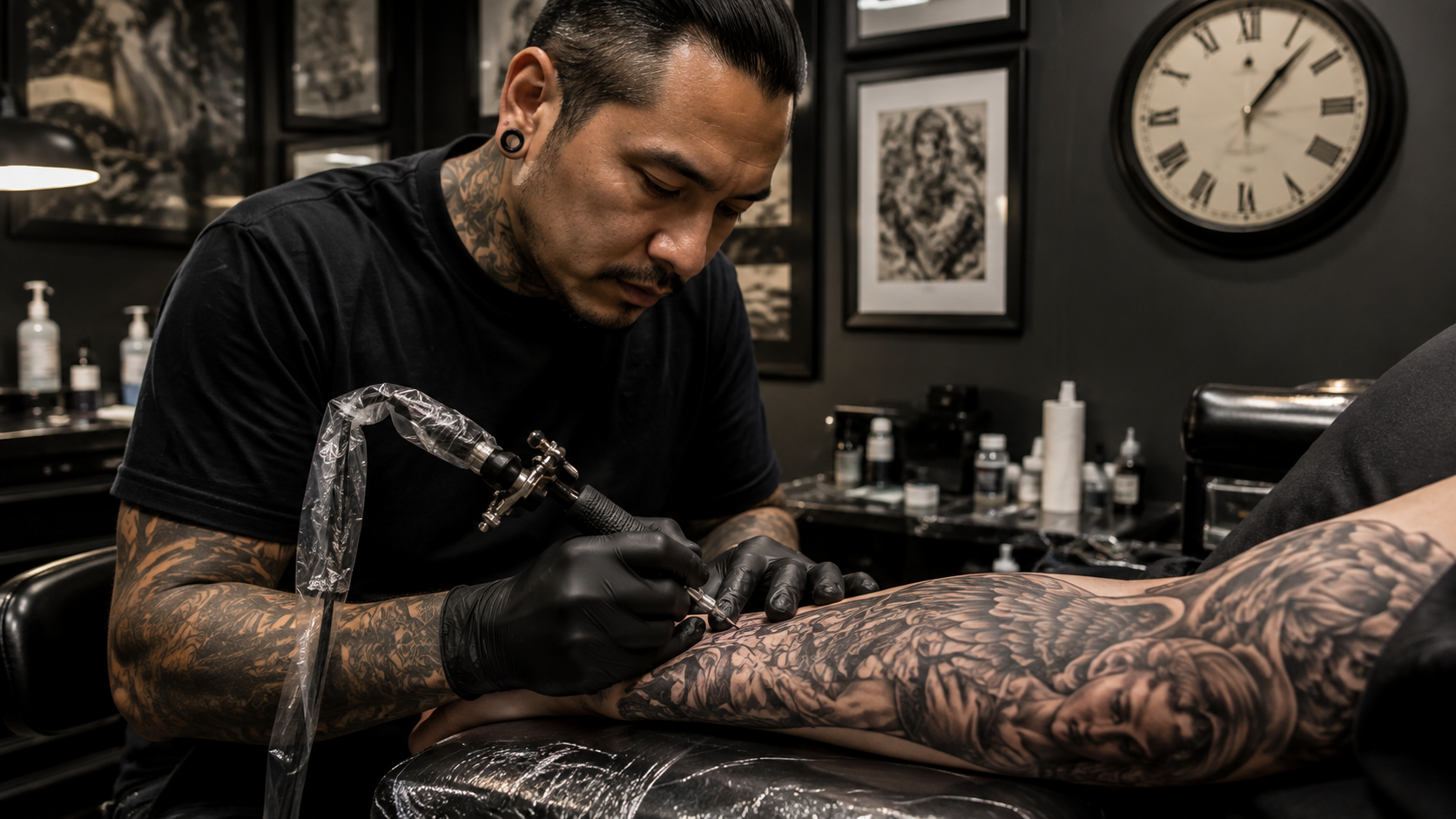
Cover‑ups aren’t just about masking mistakes; they’re about reinvention. At DH Tattooing in Livermore, CA, we view every cover‑up as a collaboration, blending technical skill with personal meaning to transform regret into pride.
Why People Choose Cover‑Up Tattoos
Cover‑ups are more common than you might think. Some of the most frequent reasons include:
-
Outdated or juvenile tattoos from teenage years
-
Names of former partners
-
Faded or distorted tattoos
-
Poorly executed or “scratcher” tattoos
-
Shifts in personal identity or style
Unlike laser removal, which can be expensive and painful, a well-executed cover-up offers a creative and less invasive solution especially when guided by an experienced artist.
What Makes a Tattoo Hard (or Easy) to Cover
Not all tattoos are created equal and not all are equally easy to cover. Key factors include:
-
Color intensity: Black ink is the hardest to mask.
-
Tattoo age: Older, faded ink is easier to cover.
-
Tattoo size and density: Dense, dark tattoos may require larger or more saturated cover designs.
-
Placement: Skin condition and location (like joints or hands) can affect how ink behaves.
Artists often view the existing tattoo as a “canvas challenge.” Rather than erase the old, they work with it by incorporating, layering, and reimagining.
How Artists Approach Cover‑Up Design
Cover‑ups demand a unique design approach. At DH Tattooing, here’s how we tackle it:
-
Assessment of existing ink: We evaluate the density, pigment, and saturation of the old tattoo.
-
Design overlay: We sketch ideas that incorporate or camouflage the original ink.
-
Line redirection: Clever use of new outlines can reroute the viewer’s eye away from unwanted features.
-
Shading mastery: We use shading to mask old shapes while adding depth and realism.
Cover‑ups aren’t just drawn on top, they’re engineered. Every line, shadow, and pigment shift is intentional.
Color Theory & Strategic Ink Choices
Color plays a massive role in successful cover‑ups. Here’s why:
-
Dark over light: You can’t use light ink to cover dark areas but you can layer darks strategically.
-
Warm vs. cool hues: Some pigments neutralize others (e.g., oranges over blues).
-
Saturation tricks: Fully saturating the area with dense color helps mask underlying shapes.
Artists often recommend designs involving bold blacks, rich blues, deep purples, and dark reds to create the depth necessary to disguise older tattoos.
Realistic Expectations: What a Cover‑Up Can and Can’t Do
It’s important to know what’s realistic:
-
You may not get a tiny, delicate design if you’re covering a large black tribal piece.
-
You may need multiple sessions, especially if the original tattoo is dense or large.
-
You may still see ghosting (faint outlines of the original) under certain lighting or over time.
The goal isn’t to erase the past, it’s to elevate it into something powerful and new.
Consultation Tips: How to Prepare for Your Appointment
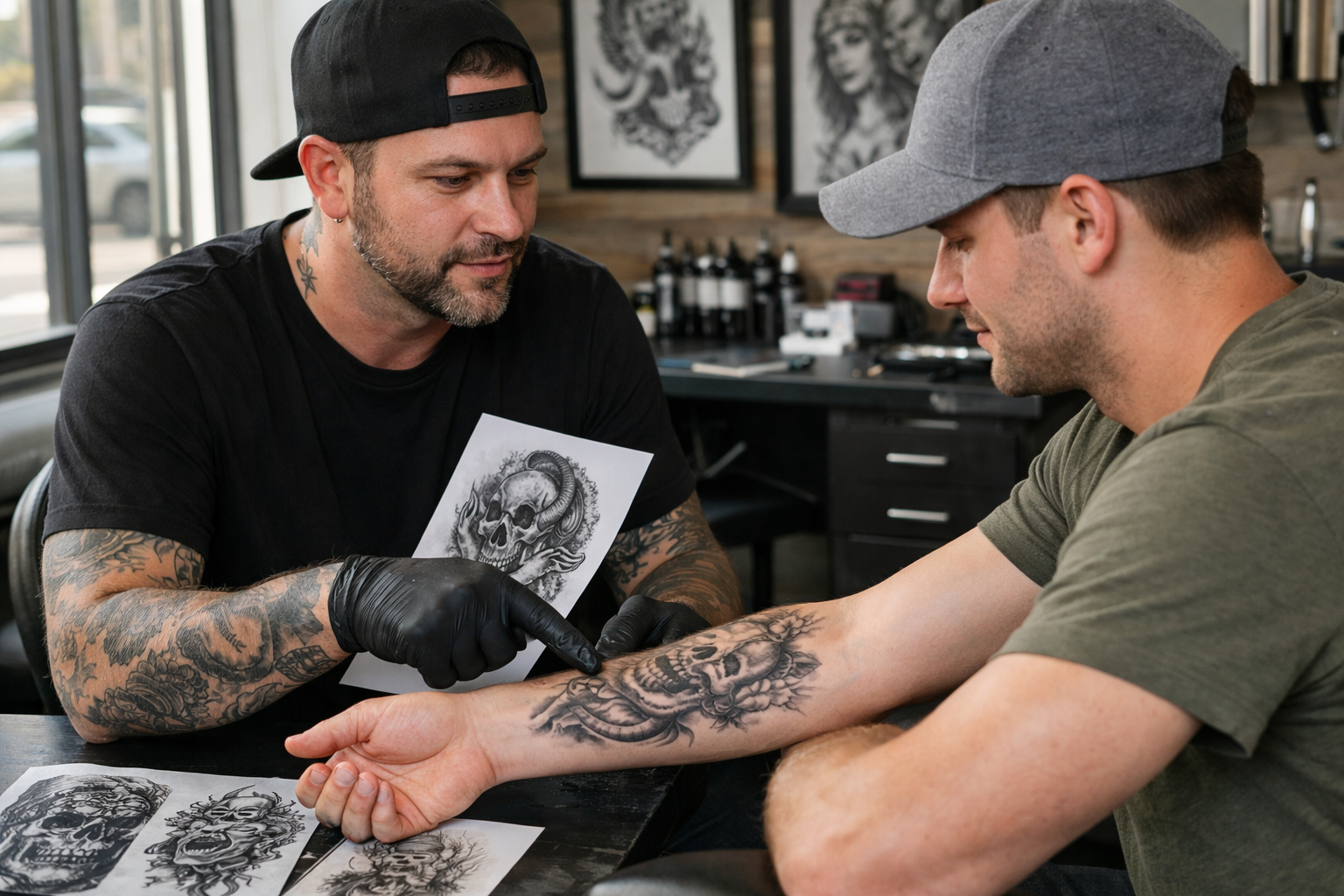
A successful cover-up starts before the needle even hits the skin. Here’s how to prepare:
-
Bring reference images of styles or themes you like (not necessarily final designs).
-
Be open-minded — your artist may recommend unexpected solutions that work better with your existing ink.
-
Avoid tanning or irritation before your consultation.
-
Know your story — understanding why you want the cover-up can help shape the new art’s meaning.
This is a partnership, and your openness can lead to a far more personalized design.
Best Design Ideas for Cover‑Ups
Here are common styles and themes that work beautifully for cover-ups:
-
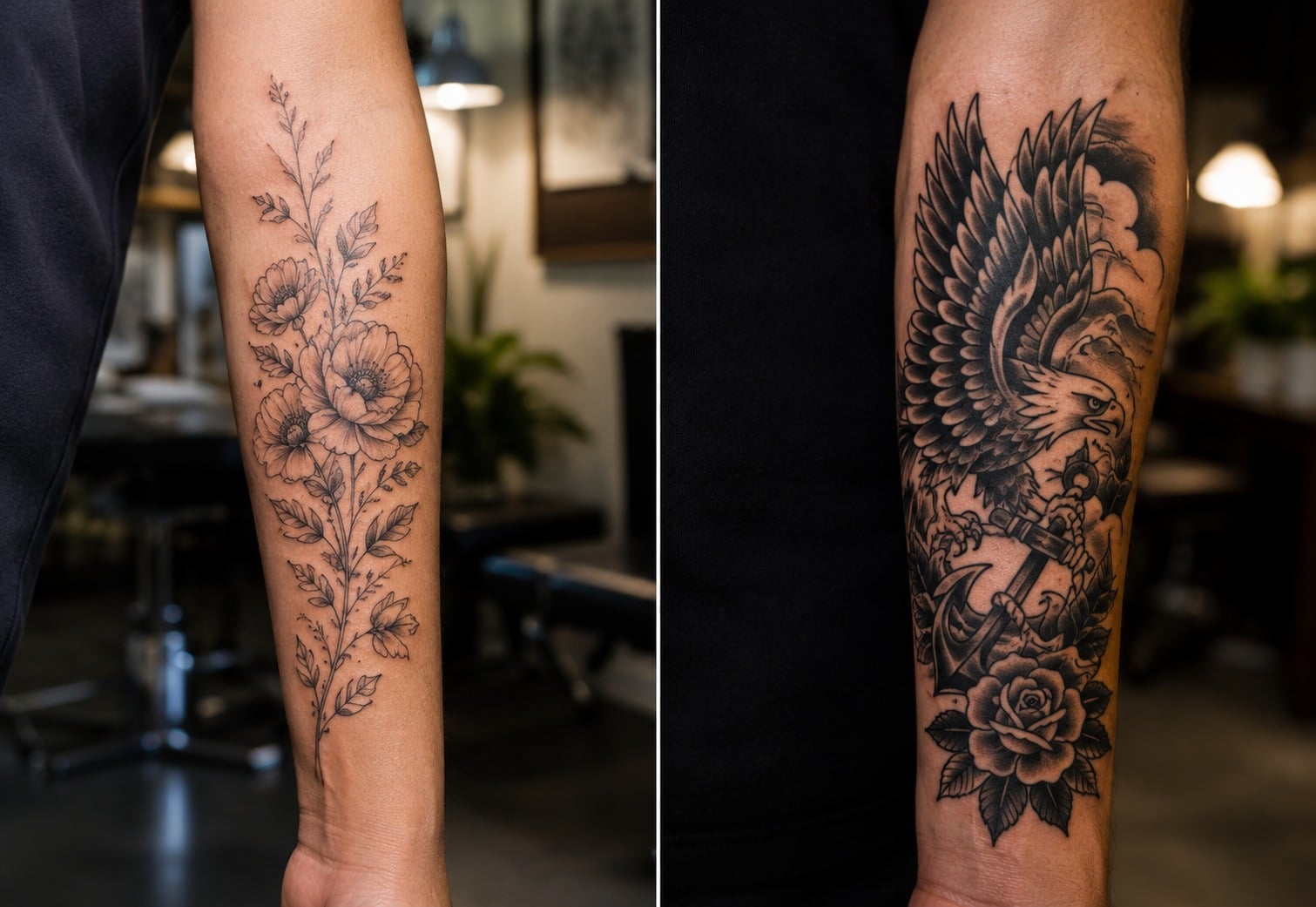
Black and grey realism: Shadows and textures conceal older lines.
-
Neo-traditional: Bold lines and heavy saturation dominate old ink.
-
Floral work: Roses, peonies, and lilies can blend shading beautifully.
-
Skulls and animals: Natural asymmetry hides old shapes.
-
Mandala and geometric patterns: Clever structure with strong outlines and shading.
The key isn’t just to hide, it’s to transform.
What to Avoid When Planning a Cover‑Up
Mistakes to dodge:
-
Insisting on something too small or light: It won’t mask the original effectively.
-
Rushing the design: Cover-ups need precision and patience.
-
Choosing an inexperienced artist: Cover-up work is a specialized skill — not all tattooers excel at it.
-
Skipping aftercare: Healing is just as critical for cover-ups.
Trust your artist, their goal is to make your new tattoo something you love for life.
Healing & Aftercare for Cover-Up Tattoos
Healing a cover-up isn’t quite the same as healing a fresh piece on untouched skin. Here’s what you should expect:
-
Slightly longer healing time due to ink layering
-
More risk of scabbing, especially if the old tattoo had scar tissue
-
Follow aftercare exactly: Clean gently, moisturize appropriately, and avoid sun exposure.
DH Tattooing’s aftercare instructions will guide you through every stage of recovery.
How to Ensure Your New Tattoo Lasts
You’ve given your skin a second chance. Now, protect it.
-
Always use SPF on exposed tattoos.
-
Moisturize regularly to keep skin supple.
-
Avoid weight fluctuation or stretching in areas where design detail matters.
-
Book a touch‑up if needed — especially after your first heal cycle.
A well-maintained cover-up can last just as long and look just as vibrant as any fresh piece.
History of Cover-Up Tattoos: From Ancient to Modern
Tattoo cover-ups have roots far older than modern electric tattooing. In ancient tribal societies, tattoos often served as rites of passage, identity markers, or even punishments. When a tattoo no longer held meaning or conveyed shame, it was sometimes modified with additional ink. This rudimentary form of cover-up evolved as cultures developed increasingly sophisticated tattooing tools.
During the 20th century, particularly in prison and military cultures, cover-ups became more common as people sought to erase names, symbols, or affiliations. With the rise of tattoo parlors in the 1980s and 90s, professional artists began exploring ways to layer pigment more strategically, leading to today’s advanced methods that turn old ink into masterpieces.
Laser Fading Before Cover-Up: When and Why It’s Worth It
Not every tattoo is ready to be covered right away. Some are too dark, too dense, or located on compromised skin. In these cases, laser tattoo removal or fading can be an essential first step.
Laser sessions don’t have to erase the entire tattoo, partial fading can lighten stubborn blacks and blues enough to make a cover-up feasible. While more expensive and time-consuming, combining laser with cover-up tattooing offers the best of both worlds: artistic freedom for the tattooer and better long-term results for the client.
Clients should plan for 3–6 sessions, spaced 6–8 weeks apart. Healing fully between sessions is key to preventing scarring. Patience pays off when it opens the door to better design options.
Case Studies: Real Cover-Up Transformations at DH Tattooing
At DH Tattooing, we specialize in high-level cover-up work. Here are a few real-life transformations (names changed for privacy):
“Lisa’s Phoenix”: Lisa had a faded heart with her ex’s name. After two laser sessions, we designed a powerful phoenix rising from flames to symbolize rebirth. The layering completely concealed the old piece while aligning with her personal journey.
“Dan’s Sleeve Evolution”: Dan came in with random tribal ink from the early 2000s. We built a full black and grey sleeve that included Norse mythology and geometric patterns, carefully absorbing old lines into the new flow.
“Marisol’s Floral Redemption”: Marisol wanted to erase a poorly done butterfly. We used bold, oversized peonies and leaves to envelop the lines, turning an eyesore into a centerpiece.
The Psychology of Tattoo Regret and Renewal
Tattoo regret is emotional. For many clients, the original ink is tied to past pain, impulsive choices, or lost identity. The act of covering it isn’t merely aesthetic, it’s cathartic.
Psychologists note that body art impacts self-perception. A cover-up can act as a form of reclaiming bodily autonomy. Clients often describe the experience as “letting go” or “starting over.”
At DH Tattooing, we honor the emotional weight clients bring in. We listen, offer compassionate feedback, and celebrate the moment they leave with art that reflects who they are now.
Choosing the Right Tattoo Style for Your Cover-Up
Not every style works for cover-ups. Here are common pairings:
- Blackwork or black and grey realism: Ideal for deep coverage, especially over dark ink.
- Neo-traditional: Thick outlines and vibrant saturation make this style ideal.
- Japanese Irezumi: Works well for large pieces and offers layered detail.
- Floral realism: Perfect for soft, flowing coverage that can obscure past shapes.
The trick is balancing form and function: the style must serve the art but also the task of concealing the past.
How Artists Handle Scar Tissue, Blowouts, and Ink Migration
Old tattoos often come with damaged skin. Scar tissue, blowouts, or raised areas require special handling:
- Lighter pressure: Reduces skin trauma.
- Custom needle groupings: Larger mags help blend uneven texture.
- Color blocking: Dense areas of color can distract from flaws.
At DH Tattooing, we evaluate each patch of skin to plan accordingly. Honesty with clients about what’s achievable on compromised skin is part of our transparent process.
Budgeting for a Cover-Up: What to Expect in Cost and Time
Cover-ups are often more expensive than standard tattoos. Why?
- Design complexity
- Session count (2–3 average)
- Possible laser prep
- Experience required
Expect to pay anywhere from $300 to $1,500+, depending on size, placement, and difficulty. Booking a consultation is the first step to getting an accurate estimate.
Cover-Up Tattoos for Different Skin Tones
Melanin levels influence how color appears and ages. For clients with darker skin tones:
- Rich purples, dark reds, navy blues, and black tend to hold up best.
- Pastels or light yellows may not show up effectively.
- Saturation is more important than hue for lasting visibility.
We tailor every color palette at DH Tattooing to the client’s undertones and long-term vibrancy goals.
Cultural Considerations and Symbolism in Cover-Ups
Cover-ups often represent transformation. Some clients seek designs with cultural or spiritual meaning:
- Phoenix: Rebirth
- Lotus: Rising from pain
- Wolves or lions: Strength
- Religious symbols: Faith renewal
We respect cultural symbolism and encourage discussions around meaning. Your cover-up should tell a story you connect with deeply.
Long-Term Maintenance: When to Get Touch-Ups and How to Keep It Fresh
Even the best cover-up can fade over time. Here’s how to maintain yours:
- Apply SPF 30+ anytime skin is exposed
- Moisturize daily to preserve elasticity
- Avoid weight fluctuations in inked areas
- Schedule a touch-up within 6–12 months if ghosting occurs
Cover-ups require care but with attention, they stay vibrant and powerful for years.
Final Thoughts: Embracing the Journey
Cover‑up tattoos are more than technical challenges. They’re emotional milestones. They represent change, healing, and renewal.
If you’re considering a cover‑up, know this: you’re not hiding your past, you’re owning it and rewriting the story on your own terms.
And with the right artist by your side, that new chapter can be bold, beautiful, and unforgettable.